Third-Party AI Risk — How to Govern What You Don't Build
Third-Party AI Risk: Most organizations don't build AI — they buy it, embed it, or use it as a service.
ISO 42001 Explained: The first certifiable AI Management System (AIMS) standard.
AI Data Governance: Consent, legality, and ethical considerations in data collection.
AI Decommissioning: Regulatory changes that render the system non-compliant.
The EU AI Act Explained: Social scoring, manipulative AI, untargeted facial scraping, real-time biometric identification.
AI Training and Awareness: Policies without understanding produce compliance theater, not governance.
Model Cards, Datasheets, and AI Documentation: What they contain: intended use, limitations, performance metrics, ethical considerations.
Agentic AI Governance: The shift from recommendation to action — and why it changes everything.
AI and Consumer Protection Law: Section 5 unfair or deceptive practices applied to AI.
Building an AI Governance Program: AI governance officer or chief AI ethics officer.
AI Testing and Validation: A model can be 95% accurate overall and 60% accurate for a specific demographic.
What Is AI Governance: AI systems are fundamentally different from traditional software — they are probabilistic, opaque, autonomous, and data-dependent.
NIST AI RMF vs. ISO 42001 vs. EU AI Act: OECD = principles, NIST = voluntary framework, ISO 42001 = certifiable standard, EU AI Act = law.
NIST AI Risk Management Framework: Core functions, categories, and subcategories.
Evaluating AI for Deployment: Business objectives and performance requirements.
How Data Privacy Laws Apply to AI: Notice requirements for AI-processed data.
AI Developers vs. Deployers vs. Providers: Developer: builds the model or AI system.
AI Vendor Contracts: Data ownership and data handling provisions.
Continuous AI Monitoring: Data drift: input distributions change over time.
The OECD AI Principles: Inclusive growth and sustainable development.
AI Lifecycle Policies: Use case assessment and approval: when AI is (and isn't) the right solution.
AI Governance for Financial Services: SR 11-7: Federal Reserve model risk management guidance applied to AI.
Transparency Obligations for AI: Transparency by risk tier: prohibited, high-risk, limited risk, minimal risk.
AI Explainability: Explainability vs. interpretability vs. transparency — three distinct concepts.
AI and Product Liability: Design defects: flawed training, biased data, inadequate testing.
AI Incident Management: Brittleness, opacity, and cascading effects distinguish AI incidents from IT incidents.
AI Impact Assessments: Privacy Impact Assessment (PIA/DPIA).
AI Risks and Harms: Discrimination in automated decisions (hiring, lending, insurance).
Governing AI System Design: Business need, feasibility, and risk/benefit analysis.
AI Release Readiness: Model performance validated on representative test data.
AI and Intellectual Property Law: Can copyrighted material be used for AI training? Current legal landscape.
AI Governance Maturity: Level 1 — Ad hoc: AI experiments without oversight or policy.
Responsible AI Principles: Bias testing using demographic parity, equalized odds, and disparate impact analysis.
Secondary Risks and Unintended Uses: Function creep: when AI is used beyond its intended purpose.
External Communication Plans for AI: What stakeholders need to know about your AI — before anything goes wrong.
Cross-Functional AI Governance: AI impacts cannot be understood by examining technology alone.
EU AI Act: Risk management system: continuous, iterative, throughout lifecycle.
General-Purpose AI Under the EU AI Act: What qualifies as a general-purpose AI model under the Act.
The AIGP Certification: IAPP's AI Governance Professional certification.
Ongoing AI Governance: Internal audit vs. external audit vs. algorithmic audit.
AI and Non-Discrimination Law: Title VII and AI in hiring, promotion, termination.
Deploying AI Responsibly: Translating organizational policies to the deployment context.

Existing laws already apply to AI — civil rights, HIPAA, GLBA, and new state rules. Here is what matters for your work.
A detailed comparison of enterprise AI training providers in India — AI Guru, Great Learning, UpGrad, Simplilearn, and NASSCOM FutureSkills — covering curriculum depth, trainer credentials, delivery models, and enterprise readiness.

How AI is showing up in pharmacies, clinics, and billing offices — practical applications, real results, and why human oversight matters.

Automation bias, rubber-stamping, and the most dangerous assumption in AI governance

The skills that matter most in an AI-augmented workplace and a three-month framework for staying current.

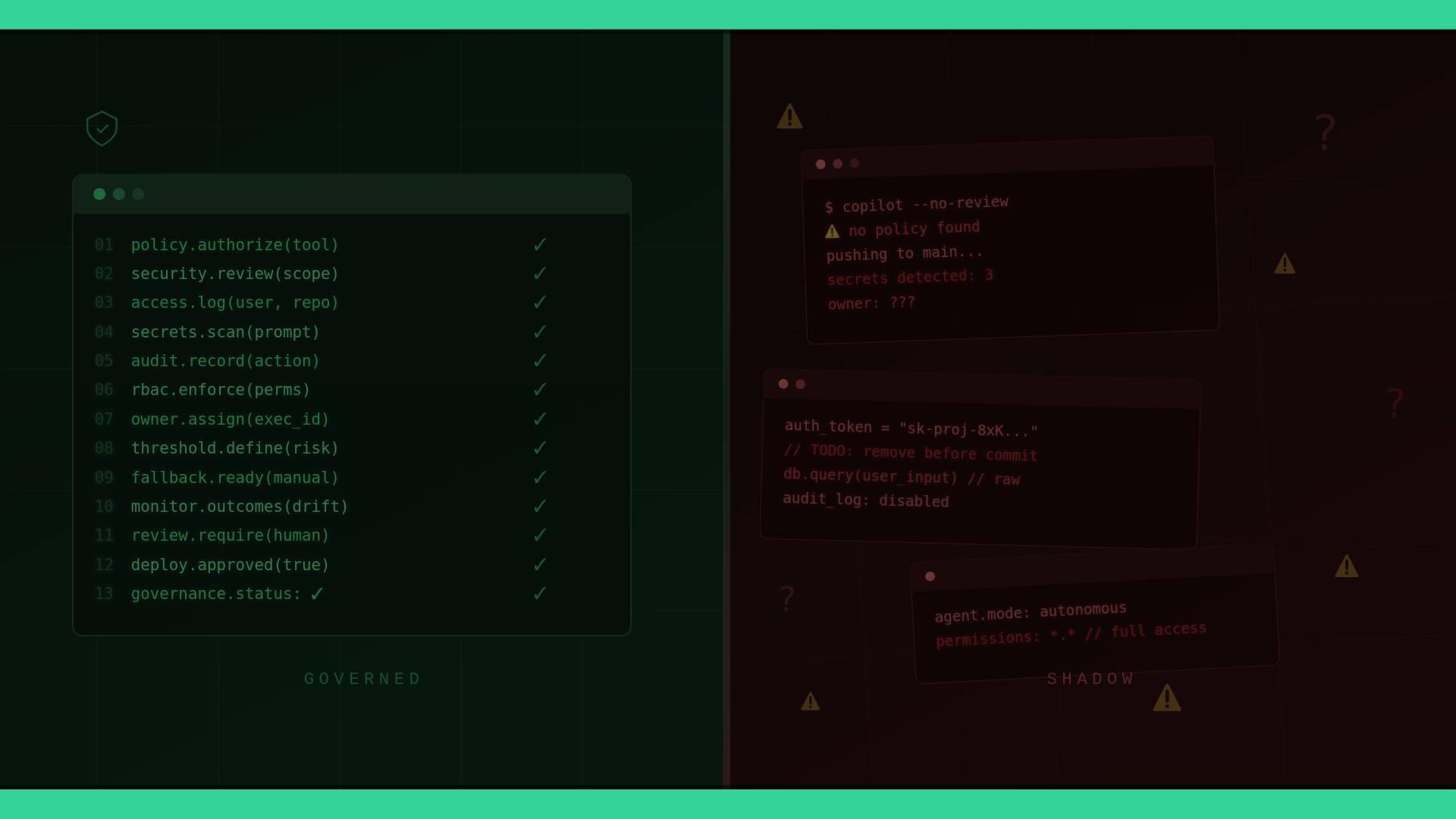
Shadow tools, agentic risk, and the governance gap in AI-assisted development

Four ethical principles and a five-step decision framework for when workplace AI rules do not give you a clear answer.
When your AI agent holds the keys - the new governance gap for agentic assistants.

When your AI agent holds the keys

Recovery, containment, authority

What to think about before you paste anything into an AI tool — storage, training, access risks, and practical protection steps.

Ten minutes before the pre-read goes out, the general counsel forwards an email thread marked "URGENT."

Why your first prompt is a starting point, not a final answer — three techniques for iterative refinement that save time.

Ritesh VajariyaCEO, AI Guru | 50K+ Users, 4 Live Products | Former AWS, Cerebras, Bloomberg

The beginner's guide to writing AI prompts that work — a four-element framework with before-and-after examples.

A simple four-question framework for deciding which tasks belong to AI and which need your human judgment.

How AI learns human prejudice through four channels — data, labeling, design, and deployment — and what you can do to spot it.
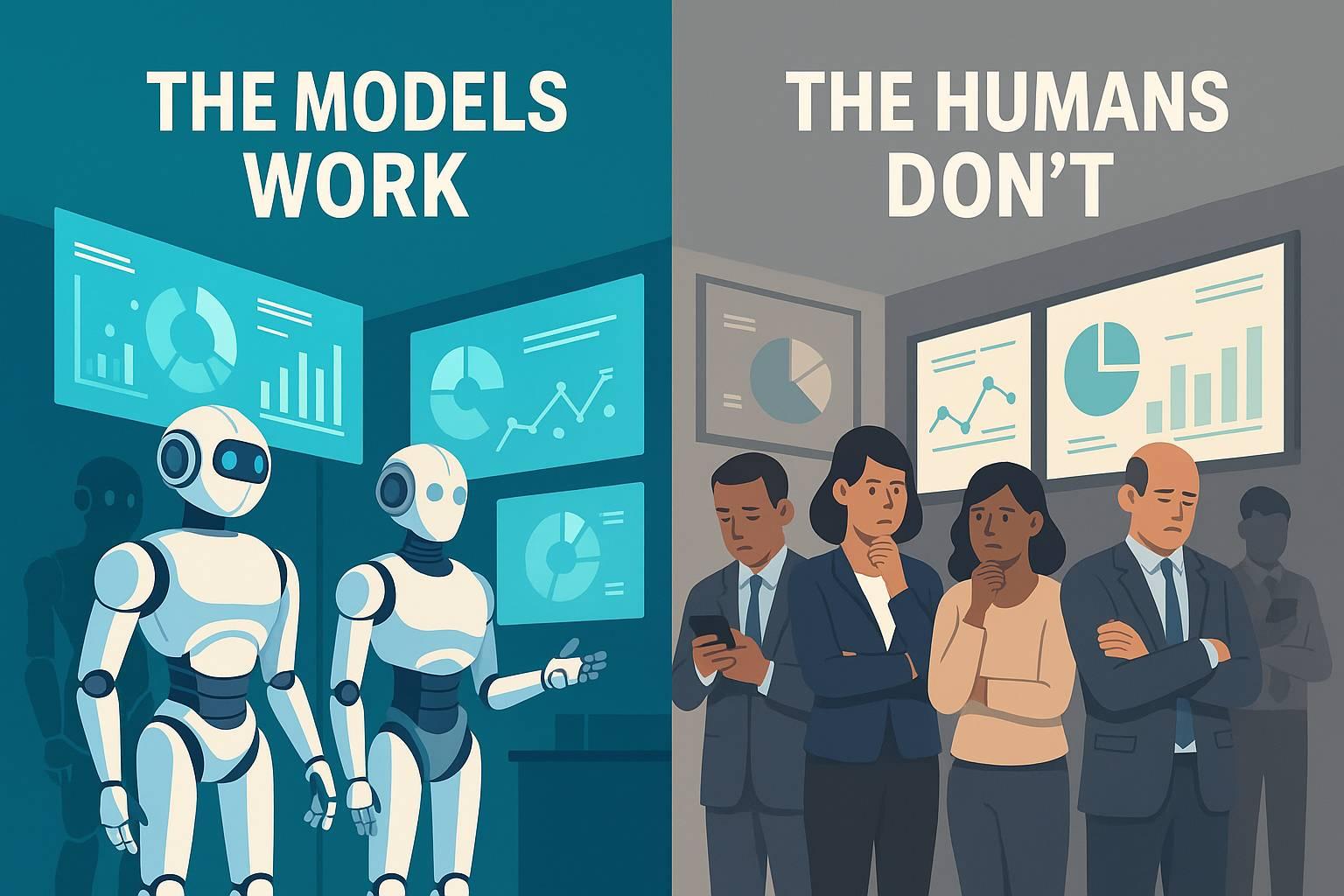
Most AI projects fail because of silent resistance, not bad models.

Last month, I was debugging an AI implementation with a client. Their model was perfect. Infrastructure solid. ROI proven.
Middle managers are being replaced not because they failed, but because coordination is now done better by machines.

Five red flags that signal unreliable AI output and a four-part evaluation framework you can use immediately.

On one side, I'm building AI products that automate exactly what middle managers do—coordination, status tracking, project management.

AI is booming, but the market may be overbuilt. Learn why timing is everything — and how real builders will survive the AI bubble.
Test article created to verify the article schema fix is working correctly

A product manager asked me last week: “Why do some launches work while others flop despite perfect execution?”

10 ways you use artificial intelligence every day without realizing it — from spam filters to maps to your phone camera.

Last Tuesday, I was having coffee with a portfolio manager at a major fund. Smart guy. Manages $4 billion. We were discussing AI - I was excited about our pr...

A plain-language guide to understanding AI without the hype — what it actually is, how it differs from regular software, and a simple test to identify it.

Thanks for reading AI Guru Nuggets. Every week, I reveal what's really happening with AI – not what you want to hear, but what you need to know.

When Accenture spends $865M to replace workers, Salesforce cuts 4,000 jobs overnight, and IBM eliminates 8,000 HR positions, we’re witnessing the end of the ...

"You know what's crazy?" he said. "Everyone's obsessed with building AI applications on top of these models. Meanwhile, the companies just routing traffic be...

Do you know someone who can benefit by learning the fundamentals of Artificial Intelligence (AI) and Machine Learning (ML)? You are in luck!

Remember 2006? When AWS launched EC2 (beta), seasoned IT professionals – including me – clutched our VMware licenses like security blankets, insisting "real ...

I'm excited to finally share what we've been building for the past few months. Today, I'm launching Plan – a strategic intelligence platform that fundamental...

My take on what's happening to our brains in the age of AI, and how we can navigate it wisely

TL;DR: I got tired of copy-pasting between ChatGPT and Gmail, so I spent 7 days building DraftEmail with AI (yes, AI building AI 🤯). It’s an AI specifically...

Earlier this week, I had the privilege to present to India’s business leaders via Economic Times’ livestream, where thousands watched live and the recording ...

A Fortune 500 CTO called me last week, frustrated. His company had just burned through $2.3 million on an AI implementation that barely moved the needle. The...

TL;DR: After seeing countless PMs struggle with stakeholder conversations (the #1 cause of project failures), I built PM Coach—an AI-powered platform where y...

Let’s face it—most Total Rewards systems today aren’t delivering on their promise. Despite significant investments, organizations struggle with outdated plat...

Welcome back to our ongoing exploration of the evolving workplace landscape! In previous newsletters, we've examined hybrid work models, productivity trends,...

A physician rushing between patient visits, typing furiously during encounters, and staying late to complete documentation. Sound familiar? According to rece...
Practical prompt engineering techniques that work across ChatGPT, Claude, and Gemini.
Navigating AI regulations, building ethics frameworks, and staying compliant in India.

As AI agents move from experimental projects to production deployments in 2025, they’re reshaping how enterprises approach automation and digital transformat...
A technical guide to Retrieval Augmented Generation for enterprise applications.
How LLMs work, what they can do, and how Indian enterprises are deploying them for real business impact.

The New Sales Intelligence Landscape Remember when sales was all about gut feelings and relationship building? Those skills are still crucial, but today’s to...
What is AI bias, why it's especially consequential in India, and a practical framework for detecting and mitigating it in your AI systems.

Learn about clustering in machine learning, from technical definitions and system architecture to implementation requirements, optimization techniques, and co

Today has been an explosive day in the AI world, with multiple groundbreaking releases that could reshape how we interact with artificial intelligence. Let’s...

Generative AI has revolutionized numerous industries, from content creation to scientific research. However, the true potential of these powerful models has ...

Alright, buckle up, folks! We're about to take a wild ride into the world of education, where AI is turning learning into a mind-blowing, multisensory advent...

If you haven’t heard yet, let me be the first one to tell you. Meta just dropped a bombshell with their latest Llama 3.1 release, and trust me, it’s a big de...

Remember when we thought AI was just about chatbots and funny image generators? I'm telling you, we're on the edge of an AI explosion. It's gonna be wild.

A prompt is the most fundamental building block of generative AI.

In the rapidly evolving landscape of artificial intelligence, generative AI stands out as a groundbreaking innovation. Imagine a technology that can craft co...

While many engineers, architects, and technical professionals have wholeheartedly adopted AI and are looking to transition their careers into this field, the...